You opened your April salary slip and something felt off.
The numbers shifted. Your take-home looks slightly different from last month. Maybe higher, maybe lower — but different enough to notice.
You are not imagining it. Your April salary slip genuinely changed. And the reason is the biggest overhaul of India’s income tax system in 65 years.
From April 1, 2026, the Income Tax Act, 2025 replaced the Income Tax Act, 1961 — the law that governed your taxes since before most of your parents were born. The new law brings changes that directly affect how your salary is calculated, what is taxable, and how much you actually take home.
Here is everything that changed in your April salary — explained simply, without jargon.
1. Form 16 Is Gone — Form 130 Takes Its Place
Every June, your company gives you Form 16 — the document that summarises your salary, TDS deducted, and taxes paid. You use it to file your income tax return.
From this year onwards, Form 16 is replaced by Form 130 under the new Income Tax Act 2025.
Form 16 vs Form 130 — What Changed?
| Feature | Old: Form 16 | New: Form 130 |
| Name | Form 16 | Form 130 |
| Parts | 2 parts (A and B) | 3 parts (A, B and C) |
| Detail level | Standard summary | More detailed salary breakup |
| Generated via | Employer manually | TRACES system only |
| Issue deadline | June 30 | June 15 (earlier) |
| Content | Basic TDS info | Full salary computation, deductions, taxable income |
Important: Your April salary slip is the first month under the new tax system. The full benefit of Form 130 will be visible when you receive it in June and file your ITR.
2. Meal Card Limit Jumped from Rs 50 to Rs 200 Per Meal
If your company gives you a meal card or food coupon — this change is significant for you.
Under the old income tax rules, only Rs 50 per meal was tax-exempt. In 2026, that Rs 50 limit was set in 2001. A quarter century later, Rs 50 barely buys a cup of chai in most Indian cities.
From April 2026, the tax-exempt meal card limit is Rs 200 per meal. That is a 4x increase.
Meal Card Tax Benefit — Before vs After April 2026
| Old Rule | New Rule April 2026 | |
| Tax-free limit per meal | Rs 50 | Rs 200 |
| Meals per month (22 working days x 2) | 44 meals | 44 meals |
| Monthly tax-free amount | Rs 2,200 | Rs 8,800 |
| Annual tax-free amount | Rs 26,400 | Rs 1,05,600 |
| Annual tax saving (30% bracket) | Rs 7,920 | Rs 31,680 |
| Extra saving from new rule | — | Rs 23,760 per year |
If your employer provides meal cards and you are in the 30% tax bracket — you can save an additional Rs 23,760 per year purely from this one change. Ask your HR if your company has updated its meal card policy.
This benefit is available under both old and new tax regimes — which makes it valuable regardless of which regime you choose.
3. Children’s Education Allowance — A 30x Increase
This one is the most dramatic change in the new income tax rules 2026 for parents.
The children’s education allowance was fixed at Rs 100 per month per child since 1998. That is not a typo — 28 years without revision.
From April 2026, it jumps to Rs 3,000 per month per child.
Children Education and Hostel Allowance — What Changed
| Allowance Type | Old Amount | New Amount (April 2026) | Increase |
| Children’s Education Allowance | Rs 100/month/child | Rs 3,000/month/child | 30x |
| Hostel Expenditure Allowance | Rs 300/month/child | Rs 9,000/month/child | 30x |
| Annual benefit (2 children) | Rs 4,800/year | Rs 1,44,000/year | 30x |
For a family with two children in school — the annual tax-exempt allowance goes from Rs 9,600 to Rs 2,88,000. That is a massive difference for middle-class families paying school fees.
This benefit applies under the old tax regime only. If you are on the new tax regime, you will not get this — which is one reason the old regime is now more attractive for parents.
4. Tax Year Replaces FY and AY — Finally
Every April, millions of Indians get confused between Financial Year (FY) and Assessment Year (AY). Which year’s ITR are you filing? When does AY start?
Under the new Income Tax Act 2025, this confusion ends. Both terms are replaced by a single concept: Tax Year.
Tax Year Concept — Old vs New
| Concept | Old System | New System (April 2026) |
| Income earning period | Financial Year (FY) | Tax Year (TY) |
| Tax filing period | Assessment Year (AY) | Same Tax Year + 1 |
| Example | FY 2026-27, AY 2027-28 | Tax Year 2026-27 |
| Confusion factor | High — two different years | Low — one term only |
For your April 2026 salary onwards, income falls under Tax Year 2026-27. You will file the ITR in Tax Year 2027-28 (by July 31, 2027). Simple.
5. Gift Voucher Limit Tripled — Both Regimes
If your company gives you gift vouchers for Diwali, performance rewards, or any occasion — the tax-free limit tripled.
Old limit: Rs 5,000 per year. New limit: Rs 15,000 per year.
And unlike most salary benefits, this one applies under both old and new tax regimes. So regardless of which regime you chose — your next gift voucher is more tax-efficient.
6. ITR Filing Deadline Extended for Some
Filing deadlines changed under the new tax rules. Check which category applies to you.
ITR Filing Deadlines — Tax Year 2026-27
| Taxpayer Type | Old Deadline | New Deadline (TY 2026-27) |
| Salaried individuals (ITR-1, ITR-2) | July 31 | July 31 (unchanged) |
| Non-audit business/professionals (ITR-3, ITR-4) | July 31 | August 31 (extended) |
| Audit cases (companies, large businesses) | October 31 | October 31 (unchanged) |
If you are a salaried employee with no business income — your ITR deadline is still July 31. No change there.
What Should You Do Right Now?
These changes are already in effect from April 1. Here is what to do before the tax season begins:
- Check if your company has updated its meal card policy to Rs 200 per meal — if not, ask HR
- If you have children in school, ask HR whether the education allowance has been updated in your salary structure
- Decide between old regime and new regime for Tax Year 2026-27 — parents with school-going children may benefit more from the old regime now
- Submit your investment declarations to your employer early — this prevents excessive TDS in April
- Note: Form 130 (replacing Form 16) will be issued by June 15 — use it to file your ITR
Old Regime vs New Regime — Which Wins Now?
Who Benefits From Which Regime — April 2026
| Your Situation | Recommended Regime |
| Pay rent AND have children in school | Old Regime — dual benefit |
| Income up to Rs 12 lakh, no major deductions | New Regime — zero tax |
| Home loan + HRA + 80C investments | Old Regime — multiple deductions |
| Freelancer/consultant, simple income | New Regime — simpler filing |
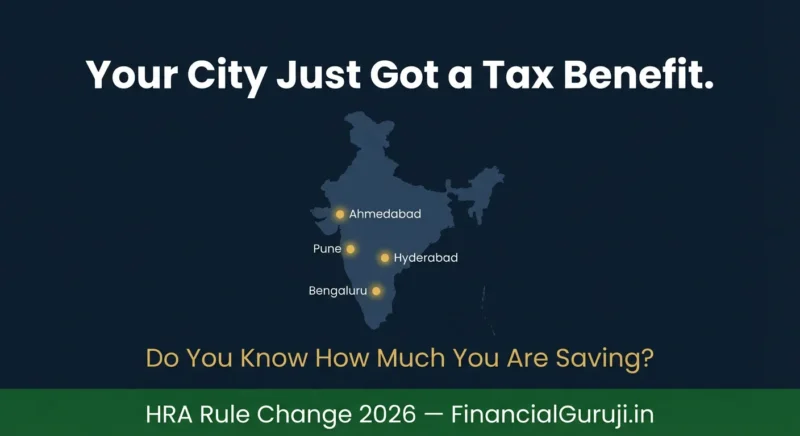
| Lives in Bengaluru/Hyderabad, pays rent | Old Regime — 50% HRA now |
| New employee, first job, no dependents | New Regime — lower rates |
There is no universal answer. Calculate both and choose the one with lower tax. Most salary platforms and payroll tools have updated their calculators for the new rules.
Key Takeaways
- New income tax rules April 2026 came into effect on April 1 — your salary slip reflects this now
- Form 16 replaced by Form 130 — same purpose, more detail, issued by June 15
- Meal card limit: Rs 50 to Rs 200 per meal — annual saving of up to Rs 23,760 for 30% bracket
- Children education allowance: Rs 100 to Rs 3,000 per month per child — 30x increase
- Hostel allowance: Rs 300 to Rs 9,000 per month per child
- Gift voucher limit: Rs 5,000 to Rs 15,000 — valid for both regimes
- Tax Year replaces FY and AY — less confusion during ITR filing
- Old regime is now more attractive for parents and HRA claimants
Disclaimer: This article is for informational purposes only based on Income Tax Act 2025 and Income Tax Rules 2026. Actual tax liability depends on individual income, employer salary structure, and deduction profile. Consult a tax professional before making regime decisions.