September 22, 2025. Most Indians were preparing for Diwali.
Quietly, without much fanfare, the government did something that directly puts money back in your pocket — every single year.
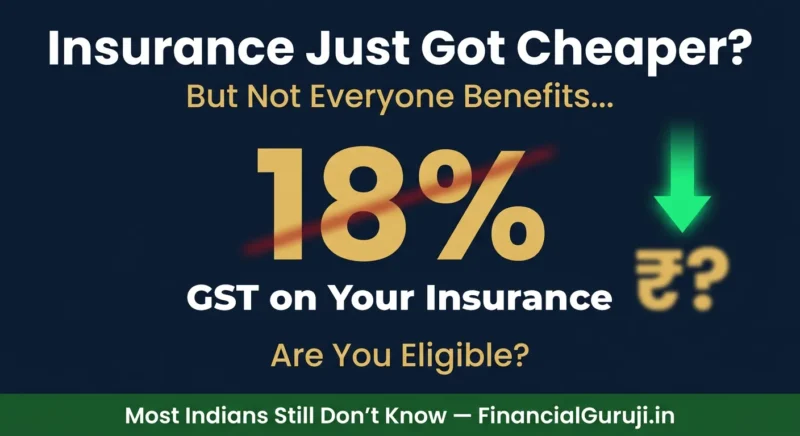
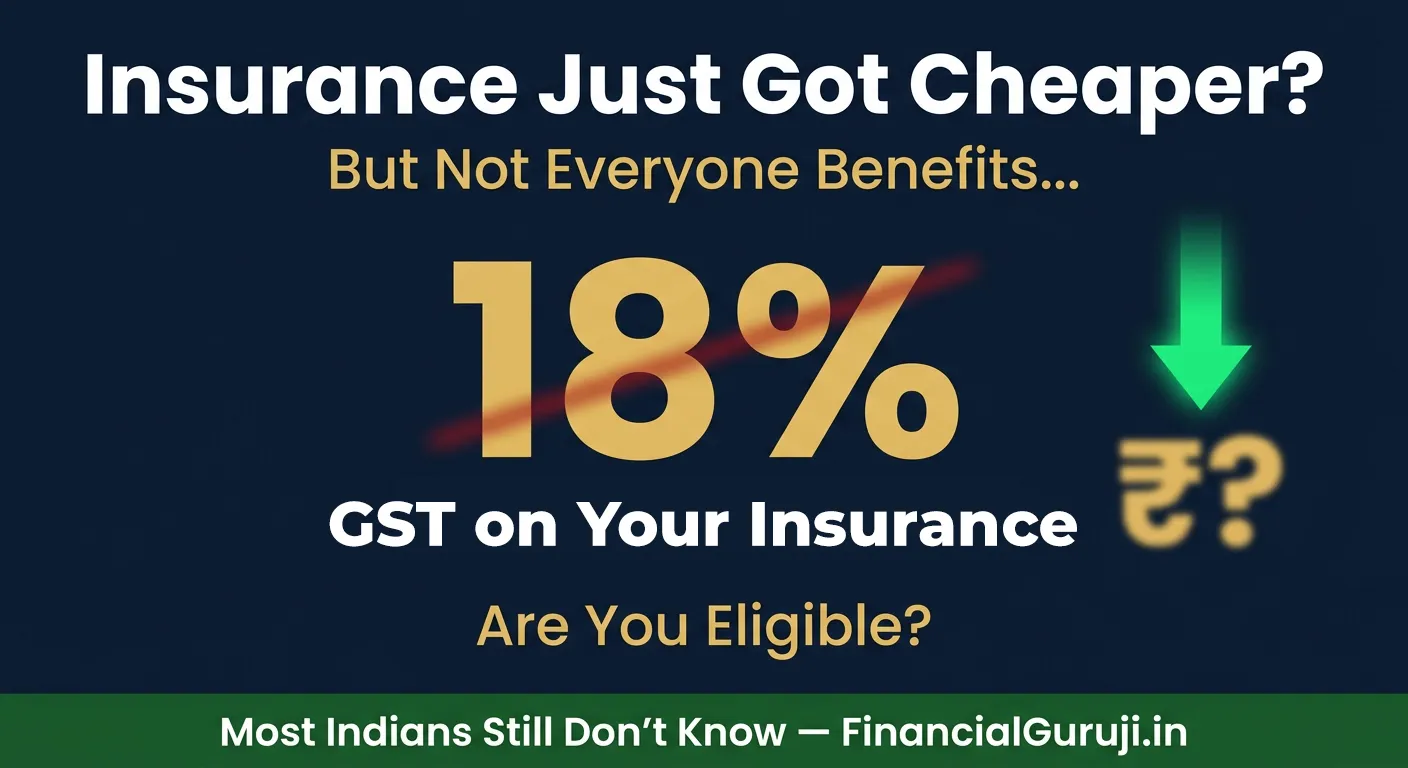
The 56th GST Council meeting, chaired by Finance Minister Nirmala Sitharaman, removed the 18% GST on individual health and life insurance premiums. Completely. Zero. Gone.
If you have a health insurance policy with ₹20,000 annual premium — you were paying ₹23,600 earlier. Now you pay ₹20,000. That ₹3,600 savings? Every year. For the rest of your policy tenure.
But here is the uncomfortable question: Is your insurer actually passing this benefit to you — or quietly keeping it?
What Exactly Changed — And What Did Not
This is where most people get confused. The GST removal is not blanket — it applies specifically to certain policies.
GST removed — 0% from September 22, 2025:
| Policy Type | GST Before | GST Now |
|---|---|---|
| Individual term insurance | 18% | 0% |
| Individual health insurance | 18% | 0% |
| Family floater health insurance | 18% | 0% |
| Senior citizen health insurance | 18% | 0% |
| ULIPs (unit-linked plans) | 18% | 0% |
| Endowment plans | 18% | 0% |
| Critical illness riders | 18% | 0% |
GST still applicable — 18%:
| Policy Type | GST |
|---|---|
| Group health insurance (employer-provided) | 18% |
| Group term insurance (office policy) | 18% |
| Motor/vehicle insurance | 18% |
| Property insurance | 18% |
| Fire insurance | 18% |
Simple rule: If you bought the policy yourself — GST is gone. If your employer bought it for you — GST remains.
How Much Are You Actually Saving?
Let us put real numbers to this.
Example 1 — Term Insurance
Rahul, 32, Bengaluru. IT professional. ₹1 crore term plan.
| Before Sept 22, 2025 | After Sept 22, 2025 | |
|---|---|---|
| Base premium | ₹12,000/year | ₹12,000/year |
| GST (18%) | ₹2,160/year | ₹0 |
| Total paid | ₹14,160/year | ₹12,000/year |
| Annual saving | ₹2,160 | |
| 25-year saving | ₹54,000 |
₹54,000 saved over 25 years — just from the GST removal. That is enough to buy another ₹50 lakh term cover.
Example 2 — Family Health Insurance
Priya and Karthik, Hyderabad. Family floater — 2 adults, 1 child. ₹10 lakh cover.
| Before | After | |
|---|---|---|
| Base premium | ₹25,000/year | ₹25,000/year |
| GST (18%) | ₹4,500/year | ₹0 |
| Total paid | ₹29,500/year | ₹25,000/year |
| Annual saving | ₹4,500 | |
| 10-year saving | ₹45,000 |
Example 3 — Senior Citizen Health Insurance
Ramesh’s parents, 65 years old. Senior citizen health policy. ₹50,000 annual premium.
| Before | After | |
|---|---|---|
| Base premium | ₹50,000/year | ₹50,000/year |
| GST (18%) | ₹9,000/year | ₹0 |
| Total paid | ₹59,000/year | ₹50,000/year |
| Annual saving | ₹9,000 |
Senior citizens benefit the most — they pay the highest premiums, so the 18% saving is the largest in absolute rupee terms.
The ₹36,000 Question — Is Your Insurer Actually Passing the Benefit?
Here is something most people do not know.
When GST was 18%, insurance companies were collecting that 18% from you — but they were also paying GST on their own operational expenses (office rent, commissions, technology, marketing). They could offset that GST paid on expenses against what they collected from you. This is called Input Tax Credit (ITC).
Now that GST is zero for customers — insurers no longer collect GST. But they also lose the ability to claim ITC on their expenses. Their operational costs effectively go up.
Result: Some insurers have quietly increased base premiums by 1-4% to compensate for lost ITC.
So your net saving may not be a full 18%. It could be 14-17% in real terms.
What to do: When your policy renews, compare the new base premium with what the base premium was last year (before GST). If the base premium has jumped significantly — shop around. Use PolicyBazaar, Ditto, or your insurer’s own website to compare.
Does Your Existing Policy Automatically Benefit?
Yes — automatically, from your next renewal.
You do not need to:
- Buy a new policy
- Cancel and re-apply
- Call your insurance company
- Do any paperwork
When your policy renewal date falls on or after September 22, 2025 — the new invoice will not include GST. The saving is automatic.
What you will not get back: GST paid before September 22, 2025 is not refundable. The exemption is not retrospective.
The Bigger Picture — Why This Matters for India
India’s insurance penetration is still very low. Only 3.7% of GDP — compared to 11% in the US and 8% in the UK. The GST removal is a direct attempt to fix this.
With term insurance adoption rising 2.5x after the GST removal, first-time buyers who previously found premiums expensive are now entering the market.
The government’s goal: Insurance for every Indian household by 2047. Making it 18% cheaper overnight is the most direct lever to get there.
What This Means for You — 3 Actions to Take
Action 1 — Check your next renewal invoice When your health or term insurance renews, verify that the invoice shows zero GST. If it still shows 18% — contact your insurer immediately. It is likely a system error that needs correction.
Action 2 — Review if you are underinsured With premiums now cheaper, this is the right time to increase your coverage if you were previously underinsured. The money you save on GST can fund a higher sum assured or an additional rider.
For term insurance: The standard recommendation is 10-12x your annual income. If your cover is less — upgrade now while premiums are lower.
For health insurance: With medical inflation running at 14% annually, a ₹5 lakh cover from 5 years ago may not be enough today. Consider a top-up plan.
Action 3 — If you do not have insurance — now is the best time No GST means the cost of protection has permanently dropped. A ₹1 crore term cover for a 30-year-old non-smoker costs approximately ₹10,000-15,000 per year — with zero GST now.
That is approximately ₹833-₹1,250 per month for ₹1 crore protection. Less than a Netflix subscription.
Common Questions — Answered
Q: My company gives me health insurance. Does this apply? No. Group health insurance provided by employers still attracts 18% GST. The exemption is only for policies you buy yourself individually.
Q: I paid GST in July 2025. Can I get a refund? No. The exemption applies only from September 22, 2025 onwards. Past payments are not refundable.
Q: What about motor insurance? My car insurance has GST — will that also be removed? No. Motor insurance, property insurance, and other general insurance products continue at 18% GST. Only individual life and health insurance is exempt.
Q: I have a ULIP — does the GST exemption apply? Yes. Individual ULIPs are covered under the exemption. However, the savings are on the insurance component of the premium, not necessarily the full premium for investment-linked plans. Check your insurer’s revised premium schedule.
Q: Will this exemption be removed in the future? Tax rules can change. But historically, exemptions on essential sectors like healthcare and life protection tend to be permanent. Any rollback would require a new GST Council decision.
Key Takeaways
- GST on individual health and life insurance removed from September 22, 2025 — from 18% to 0%
- A ₹25,000 annual health insurance premium now saves you ₹4,500 per year — ₹45,000 over 10 years
- Exemption applies automatically at your next renewal — no action needed
- Group insurance (employer-provided) still attracts 18% GST
- Motor insurance, property insurance — still at 18% GST
- Some insurers increased base premiums by 1-4% due to lost Input Tax Credit — verify your renewal invoice
- Term insurance adoption rose 2.5x after the GST removal — more Indians are finally getting protected
- No refund for GST paid before September 22, 2025
Disclaimer: This article is for informational purposes only. GST exemption details are based on the 56th GST Council decision effective September 22, 2025. Consult your insurer or a financial advisor for policy-specific queries.